
You can’t open a magazine or newspaper without reading about Omega-3 fats. Yet, Omega-3 Essential Fatty Acids (or Omega-3s, for short) remain one of the top American nutrient deficiencies!
- The body needs all sorts of different fats to function properly. Even saturated fats play a critical role for survival.
- Like a miraculous chemistry set, the body can typically convert most types of fat into whatever type it is missing.
However, Omega-3s are an exception.
- They are one of only a few types of fats called “essential” because your body cannot make its own supply.
- Omega-3s must be consumed either through diet or supplements.
Why Omega-3s Are in the Headlines:
- Omega-3 fats are in the headlines so much today because we’ve discovered just how powerful they are at controlling inflammation.
- Deficiency of Omega-3s can lead to:
- Low energy
- Depression
- Weakness
- Vision and learning problems
- Dry skin
- Poor hair and nail growth
- Impaired digestion
- Increased risk of auto-immune conditions
- Cardiovascular disease, cancer, diabetes
- Weak bones
- Impaired liver and kidney function
- Poor glandular performance
- Poor reproductive performance
- Greater likelihood of becoming overweight
The good news is that Omega-3 fats are easy to consume – in either food or a supplement.
-
The most common source in the American diet is fish:
- If you enjoy a portion of fish every day, you likely have little concern about Omega-3 deficiency.
- It’s uncommon, for example, in much of Asia.
- Fish (especially fattier varieties like salmon, mackerel, halibut, sardines, and anchovies) has an abundance of EPA (eicosapentaenoic acid) and DHA (docosahexaenoic acid), types of Omega-3 that reduce inflammation throughout the body, especially for your heart, arteries, and brain (including depression).
- If you enjoy a portion of fish every day, you likely have little concern about Omega-3 deficiency.
-
For vegans:
- Algae, which is the dietary source of omega-3s for fish, is a quality alternative.
- Flaxseed is another abundant vegan source of omega-3s via ALA (alpha-linolenic acid), a type of Omega-3 which has been shown to reduce triglycerides, blood sugar, and potentially harmful LDL cholesterol.
- ALA is also found in foods such as walnuts, chia seeds, hemp, navy beans, and avocado.
- Algae, which is the dietary source of omega-3s for fish, is a quality alternative.
-
In a healthy body, we can convert excess ALA to EPA and DHA, but only up to about 8% for men and 10-20% in women!
- Between poor overall conversion of ALA and common inadequate intake of EPA and DHA, most people likely need an Omega-3 supplement to reach adequate levels of this critical nutrient.

Fish and Algae Oils: A Better Choice Over Flaxseed Oil
- Fish and algae oils are likely better choices for Omega-3 intake compared to flaxseed oil.
- Oxidized (or rancid) fats cause inflammation instead of preventing it, and flaxseed oil is particularly vulnerable to oxidation from heat, light, and air.
- If you choose to obtain ALA Omega-3s from flaxseed, eating freshly ground flaxseed is a better alternative.
Where Did Cavemen Buy Their Fish Oil?
- If Omega-3s are so important, how did early humans thrive on a limited diet, especially those living inland without fish and with minimal, seasonal food choices?
- They certainly didn’t zip down to the Vitamin Shoppe! The answer is grass.
- Fish aren’t high in Omega-3s because of anything endemic in fish; it’s because fish eat algae and seaweed. These foods are rich in Omega-3s, which are then present in the fish’s flesh.
- Early humans obtained Omega-3s from the meat they hunted.
- Fish aren’t high in Omega-3s because of anything endemic in fish; it’s because fish eat algae and seaweed. These foods are rich in Omega-3s, which are then present in the fish’s flesh.
Grass-Fed Meat and Dairy: Complementary Omega-3 Sources
- Meat today from grass-fed, pastured, or wild animals that forage for natural foods also contains Omega-3s.
- The dairy from these animals is another complementary source of Omega-3s.
- Factory farming practices in the US typically involve animals never allowed on pasture and fed corn feed soaked in high-fructose corn syrup.
- The impact? No Omega-3s in conventionally raised meat.
- The impact? No Omega-3s in conventionally raised meat.
The Modern Imbalance of Fats
- Early humans did not struggle with the imbalance of fats that the typical American diet presents today.
- Due to economic subsidies of corn and soybeans, most of the oil consumed by Americans comes from Omega-6 oils (e.g., corn, soybean, safflower, sunflower).
- These are commonly found in convenience, processed snack, drive-thru, and restaurant foods.
- As a result, Americans consume a lot of Omega-6s!
- These are commonly found in convenience, processed snack, drive-thru, and restaurant foods.
- Early humans consumed Omega-3s and Omega-6s in a 1-3:1 ratio.
- Today, our ratio is closer to 30 or even 50:1.
- The impact? Omega-6s become inflammatory, and we suffer from Omega-3 deficiencies.
- Today, our ratio is closer to 30 or even 50:1.
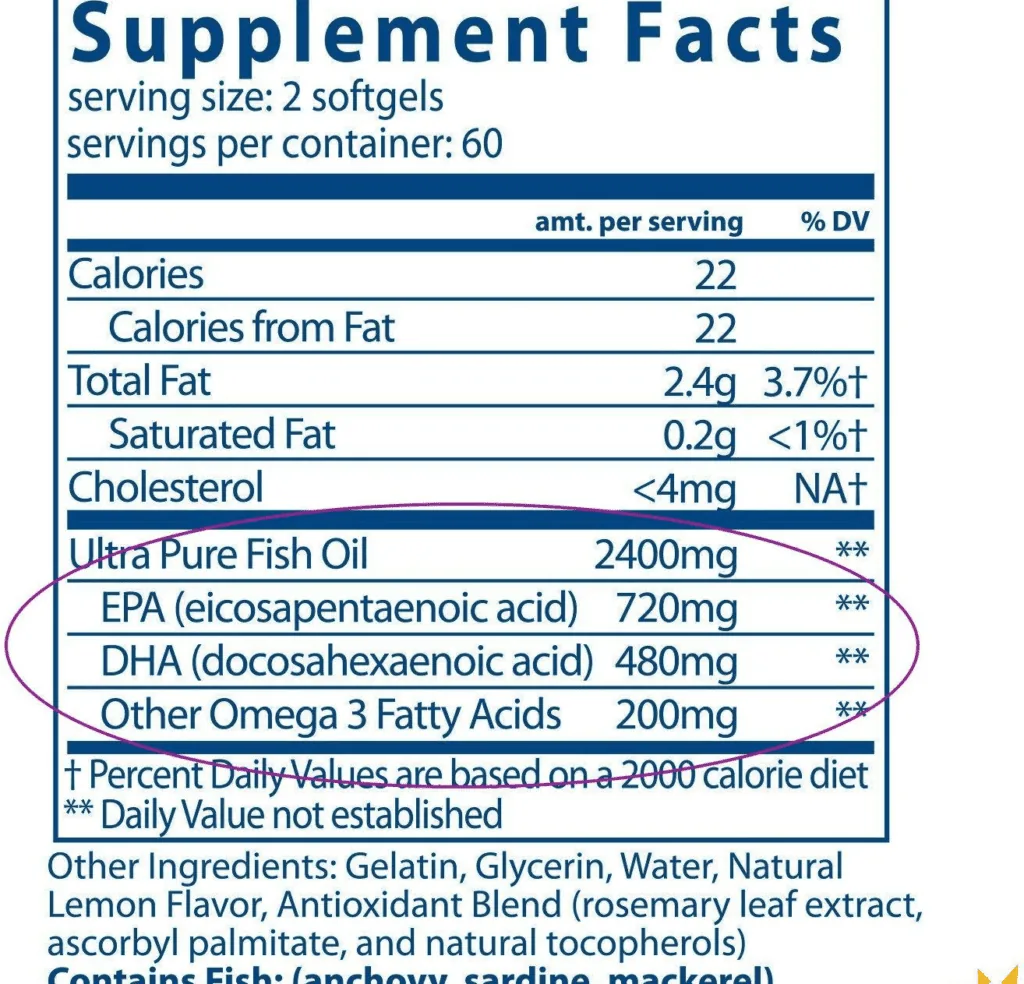
Considering Omega-3 Supplements: Are You Getting Enough?
If your diet isn’t providing a consistent daily dose of Omega-3s, a fish or algae oil supplement may be necessary. Here’s what you need to know:
- Supplement Forms: Omega-3 supplements are available in various forms, including softgels, liquids, and even gummies for kids.
- Recommended Dosage:
- Healthy Adults: An additional 1000mg of Omega-3 fats per day is generally beneficial.
- Chronic Inflammation: You may need as much as 2000-3000mg Omega-3s daily.
- Healthy Adults: An additional 1000mg of Omega-3 fats per day is generally beneficial.
- Reading Supplement Labels:
- This is not the same as 1000mg of fish oil; make sure to carefully read the supplement label for the total Omega-3 content (sum of EPA, DHA, and other Omega-3s).
- Beware of Bargains: Many low-end manufacturers dilute their fish oil. For example, 1000mg of fish oil might contain minimal actual Omega-3s, requiring you to take 6 or 8 capsules to get a good dose.
- This is not the same as 1000mg of fish oil; make sure to carefully read the supplement label for the total Omega-3 content (sum of EPA, DHA, and other Omega-3s).
- Concentration Matters:
- Sometimes, seemingly more expensive brands are a better deal because they are more concentrated, meaning your daily dose requires fewer softgels.
- Sometimes, seemingly more expensive brands are a better deal because they are more concentrated, meaning your daily dose requires fewer softgels.
- Check for Purity:
- Ensure your Omega-3 supplement is purity certified by a 3rd party and preferably molecularly distilled.
- Avoid Cheap Fish Oils: Cheap fish oil capsules often have a fishy taste and smell and may contain dangerous contaminants like PCBs and heavy metals (especially mercury).
- Far worse than not getting enough Omega-3 fats is becoming toxic in the process of getting them. Supplements are not where you want to choose the cheapest option.
- Ensure your Omega-3 supplement is purity certified by a 3rd party and preferably molecularly distilled.
Quality Recommendations:
From widely available brands, Nordic Naturals and Carlson are of good quality. Your healthcare practitioner may also have other quality recommendations.
© Purpose Inc., The School of Applied Functional MedicineTM